
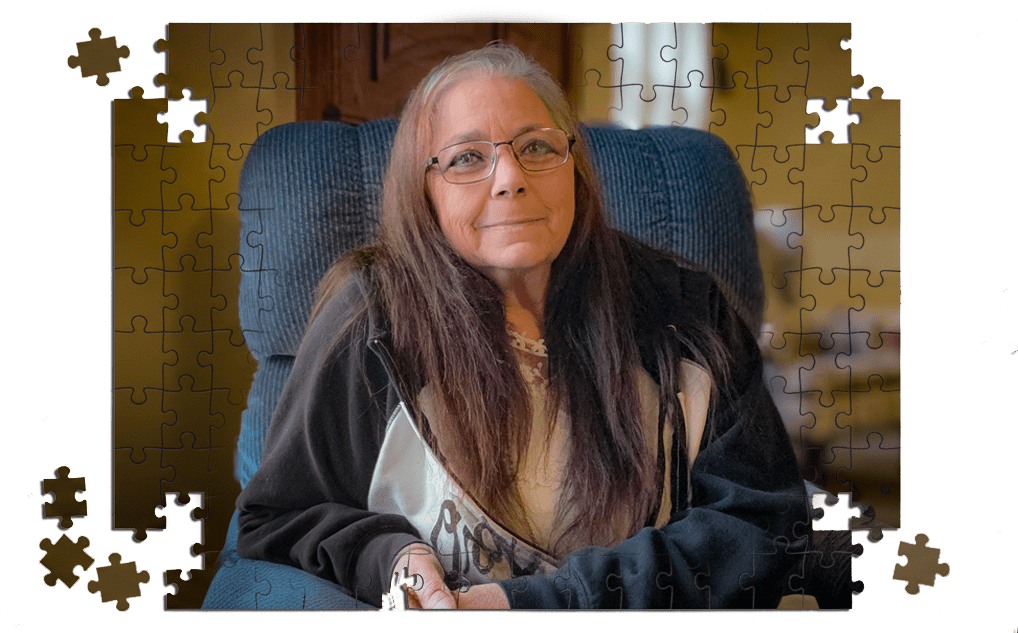
Putting the Pieces Back Together
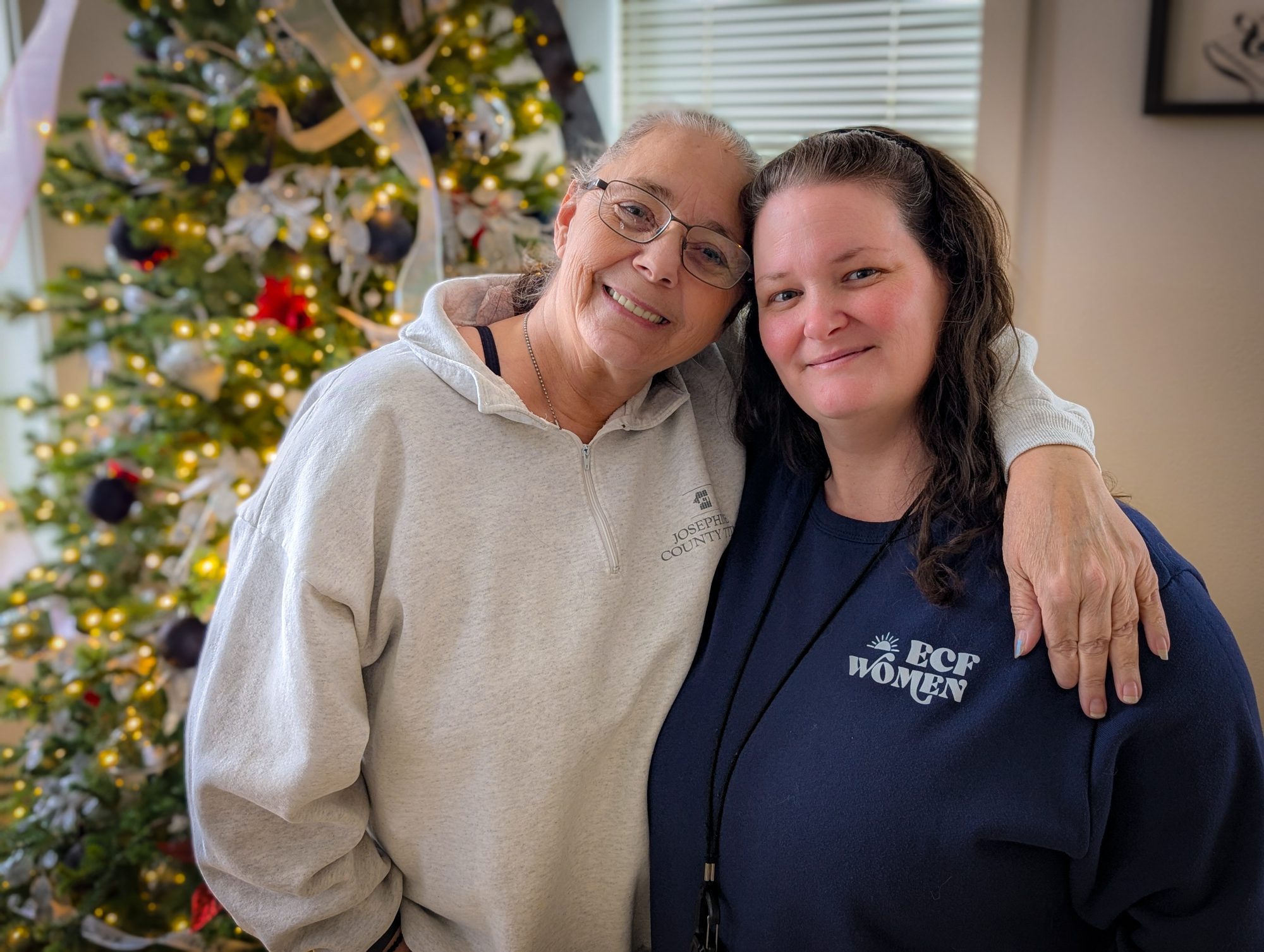
When Ginny arrived at the Gospel Rescue Mission, she was scared and overwhelmed. “I thought to myself, Could I do this? Could I follow the rules? Could I really change?” she recalls. What she didn’t know then was that this place—this routine, this community—would become home.
Ginny’s life has been shaped by resilience from an early age. Born in Brooklyn and raised in California, her childhood was marked by family separation and abuse. After her parents’ divorce, she was hidden from her father for years and raised under strict control by her stepmother. Despite this, Ginny found joy and identity working on a ranch, raising animals, and participating in Future Farmers of America, where she discovered confidence, responsibility, and pride in hard work.
As she grew older, Ginny longed for freedom—but like many, that freedom came at a cost. She entered adulthood carrying deep rebellion, pain, and eventually substance use. For years, she worked tirelessly—never relying on public assistance—using drugs to keep going during the day and alcohol to sleep at night. On her 30th birthday, something changed.
After a long evening of partying, she recalls, “I woke up the next morning and said, I’m done. And somehow, by the grace of God, I just stopped.”
Ginny went on to build a meaningful life—running a dog grooming business, raising her daughter, and later enjoying the role of grandmother. Over time, however, personal challenges began to surface, particularly around fear and boundaries. Her habit of giving beyond healthy limits eventually left her depleted in many areas of life, and those struggles ultimately brought her to the Mission. Here, Ginny began learning something new: strength doesn’t mean saying yes to everything. It means learning when to say no. “For the first time, I’m saving money. I don’t live with anxiety anymore. I’m stronger now.”
Through daily routine, chapel, and discipleship, Ginny found stability—and peace. Though the structure felt intimidating at first, she soon discovered it was calming. “Routine keeps you on the right path,” she says. “It teaches you how to live again.”
One of the most transformative moments for Ginny came through a conversation with Monica, our Women’s Coordinator. Carrying decades of guilt, Ginny finally shared burdens she had never spoken aloud. In that moment, she learned a truth that changed everything: God had already forgiven her. “I turned the page—and I haven’t felt that guilt since.”

Christmas at the Mission became another powerful moment. Surrounded by lights, laughter, and children opening gifts, Ginny experienced something she hadn’t felt in years: a true sense of family. “It felt like a real home Christmas,” she says. “One of the best I’ve had in a long time.”
Today, Ginny looks toward the future with hope. She’s saving for a car, dreaming of a place of her own with a rose garden, and hoping to return to work in a veterinary office—something she’s always loved. Most importantly, she’s walking daily with the Lord. “I’ve always known God,” she says. “But now I know His Word. I have clarity. I have freedom. I’m happier.”
When asked how she arrived at the Mission, Ginny says simply: “I came here broken. I won’t leave that way. You helped me put my puzzle back together—and now it’s complete.”
Ginny’s story is one of courage, healing, and God’s redemptive work—made possible through the faithfulness of this community. Thank you for being part of the journey.
Staff Spotlight:
Jim Eldred
Kitchen Manager
When Jim walks into the Gospel Rescue Mission kitchen—often as early as 5:00 AM—he isn’t just looking at a prep list; he’s looking at a classroom. As the Kitchen Manager, Jim is responsible for feeding hundreds of people daily, but he views the food as secondary. “I have 30 days or less to teach a person how to get a job and hold a job,” Jim says. “That’s the first step.”

Jim’s background prepared him well for this environment. A former baker aboard the USS Robert E. Peary (FF-1073) in the Navy, he knows the importance of discipline. When residents are assigned to the kitchen, they aren’t just cooking; they are learning the building blocks of employment.
“A lot of these guys, even guys that are 40 or 50 years old, have never had a job—I mean a Social Security type of job,” Jim explains. He notes that while some may have done day labor, many lack experience with daily supervision or structure. His goal is to instill the fundamentals: showing up on time, communicating effectively, following directions, working as a team, and cleaning up after themselves.
Running a commercial kitchen that relies on donations requires more than just logistics; it requires faith. Jim vividly recalls one year when the Mission failed to receive its usual donation of a cow from the County Fair. It was a significant loss, leaving the kitchen facing a serious meat shortage for the coming year.
Concerned, Jim went to his supervisor, Brian, to break the bad news. Brian’s response wasn’t to panic, but to pause. “Let’s pray,” he said. Together, they asked God to provide.

The answer didn’t take weeks or even days. It was waiting for Jim by the time he walked back downstairs.
“I went back down to the kitchen to unlock my door, and there was a little note sticking there: Call Steve!!,” Jim says. He dialed the number, and the voice on the other end offered something far better than the single cow they had missed out on. Steve asked if the Mission could use some hamburger—specifically, 74 forty-pound cases of it.
In a matter of minutes, the kitchen had gone from having zero beef to nearly 3,000 pounds of it! Stunned by the immediate and overwhelming result, Jim could only reply, “I just prayed on this a minute ago!”
For Jim, the “freedom” of the Mission—the freedom to pray and read the Bible at work—is what keeps him going. He sees the kitchen as a place where daily needs are met not just by shopping, but by reliance on God. “All too often I’ll knee-jerk and go buy milk, and when I get back, a guy just brought ten gallons,” he laughs. I think the Lord wanted to show me that all I have to do is pray.” For Jim, the kitchen is where men take their ‘first step into success’—restoring their dignity one meal at a time.

Love In Action – “Let all that you do be done in love.” 1 Corinthians 16:14
By: Brian Bouteller, Executive Director
Love is the heartbeat of the Gospel. Not love the noun, but love the verb. Throughout the month of February, while the world talks of romance, we will be talking about redemptive love. About the kind of love that gets its hands dirty, forgives quickly, and puts others before self. At work, in the dorms, and throughout our community, love in action is how we display Christ to the world.
Our message to Mission residents this month is that real love looks like responsibility, respect and service. It’s not just an emotion; it’s motion! It shows up on time and always lends a hand. It speaks kindly even when tired. One test of genuine faith is found not in what we say we believe, but how we treat people – particularly when it’s inconvenient.

We will start the month focusing on how love starts by being present. Put simply, “Love Shows Up”. The Apostle John tells us, “Let us not love with words or speech but with actions and in truth.” – 1 John 3:18. For our group this looks like learning to be dependable. Faithful attendance, participation, and reliability demonstrates our gratitude and love for the Mission, our community, and one another. In other words, love shows up, even when it doesn’t feel like it.
Love not only shows up, but it listens, serves, and forgives. We will remind one another that listening is loving with your ears open. “Everyone should be quick to listen, slow to speak, and slow to become angry.” – James 1:19. Love in action is the gold standard of transformation at the Mission which begins with being present and then listening to the hurts and needs around us. This leads to both forgiveness and service.
In his book, “How To Be Free From Bitterness” author Jim Wilson writes, “Guilt is what we feel when we sin, and bitterness is what we feel when others sin against us. The very definition of bitterness points to the actions of another.” If we are going to learn to love like Christ we must learn to pray for and forgive people who’ve hurt us which is the hardest and best thing we can do. And though it’s easy to say we forgive someone, when we serve those who have wounded us, it can demonstrate both to ourselves and others that our words are sincere.
Our goal in February is that our residents and staff will come to understand that biblical love expresses itself through action and service. This should look like improved teamwork, communication, and conflict resolution. Residents will be asked to identify one person they forgave and one that they served with sincere intention. Please pray that the Lord of love will soften hearts and change lives. Check our social media this month for stories in keeping with our theme of how love in action truly transforms lives.
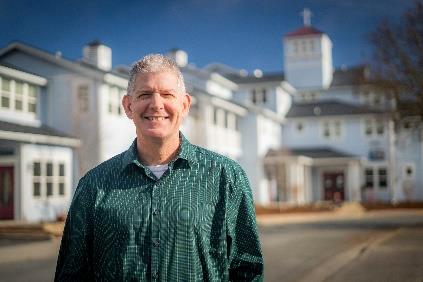
– Brian Bouteller, Executive Director